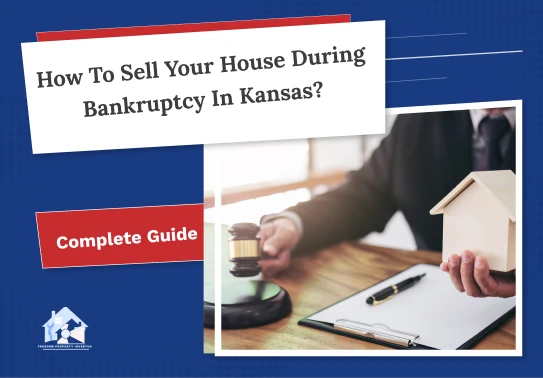
You can sell a house while you are in bankruptcy. People do it in Wichita every month.
What you cannot do is sell it the way you would normally. Once you file, the house stops being purely yours to dispose of, and a sale has to move through the case rather than around it.
Here is how that actually works, without the thirty headings most articles on this subject put you through.
The Moment You File, the Property Belongs to the Estate
Filing creates a bankruptcy estate, and your house goes into it. It also triggers the automatic stay, which stops foreclosure, collection calls, and most lawsuits immediately.
That stay is genuinely useful if a sheriff’s sale was coming. It is also the reason you cannot just sign a contract and close. The house is now property of the estate, and the court and trustee have a say in what happens to it.
Selling without approval is the one serious mistake in this area. It can mean losing your discharge, and in bad cases it is treated as fraud.
Chapter 7 Versus Chapter 13
Which chapter you filed changes the shape of the sale.
In Chapter 7, a trustee is appointed to review your assets. If your house has equity beyond what Kansas exemptions protect, the trustee may sell it to pay creditors. If you want to sell it yourself, the trustee has to sign off, the sale goes before the court on a motion, and creditors get notice and a chance to object.
In Chapter 13, you keep your property and pay creditors through a three to five year plan. Selling mid-plan is normal and often a good idea, but it still requires court approval, and the proceeds usually affect your plan. Depending on the numbers, your plan may need to be modified, or the sale may let you pay it off early and finish the case.
Either way, your bankruptcy attorney files the motion. This is not a step you handle yourself, and it is not a step a cash buyer can handle for you.
The Kansas Homestead Exemption Is Unusually Generous
This is the part Wichita homeowners most often do not know, and it changes the math.
Under K.S.A. 60-2301 and Article 15, Section 9 of the Kansas Constitution, the homestead exemption covers one acre inside the limits of an incorporated city, or 160 acres of farming land, occupied as a residence by the owner or the owner’s family.
Notice what is missing from that sentence. There is no dollar cap. A federal bankruptcy court applying Kansas law has described the exemption as being without dollar value limitation.
Most states cap the protected equity at some figure. Kansas protects the homestead itself. For a typical Wichita house on a standard city lot, that frequently means the equity is protected no matter how much of it there is.
Two limits are worth knowing. The exemption does not protect against unpaid property taxes, or against obligations incurred to buy or improve the property, which is why a mortgage still gets paid. And federal law can cap the exemption for a home bought shortly before filing, so if you purchased recently, ask your attorney specifically about that.
Kansas filers also use the Kansas exemption set rather than choosing the federal list, which is why these state figures are the ones that matter in a Wichita case.
Why People Sell Anyway
If the homestead is protected, why sell at all?
Usually because the house is the problem rather than the asset. The mortgage payment no longer fits the budget that comes out of the bankruptcy, or the property needs repairs there is no money for.
Often the filing followed a divorce, a job loss, or a medical event, and the house is simply bigger or more expensive than the next chapter of life requires.
Sometimes it is the opposite. There is real equity, the exemption protects it, and converting the house to cash is the cleanest way to get a fresh start on the other side of the case.
How the Sale Runs
The sequence is straightforward once the approval piece is handled.
Start by telling your attorney you want to sell, before you talk to any buyer. Then get an honest value on the house as it sits.
Your attorney files a motion to sell, creditors receive notice, and absent objections the court enters an order. You close, and the proceeds are distributed according to the order and your plan or exemptions.
The timeline is driven by the court calendar and the notice period, not by the buyer. A buyer who understands that is worth a great deal. A buyer who starts asking why it is taking so long is going to make the process worse.
Why a Cash Sale Fits a Bankruptcy Case
A traditional listing sits badly on top of a bankruptcy. It takes months, the buyer needs financing that can fall apart, and an inspection usually produces a repair demand you are in no position to fund.
A direct sale removes those variables. The price is fixed, there is no lender, no appraisal, and no repair negotiation, which means the number in the motion is the number at closing. That matters when a judge, a trustee, and a creditor list are all looking at the same figure.
We buy houses as-is in Wichita, which also means the condition of the house stops being a reason the sale cannot happen.
If foreclosure was already underway before you filed, our page on selling a house in foreclosure in Wichita covers how those timelines interact. If the filing followed a separation, see selling a house during divorce.
What to Do Next
Call your bankruptcy attorney first. Ask what approval your specific chapter requires, whether your equity is protected, and how a sale would affect your case or your plan.
Then get a real number on the house, because every decision above depends on knowing what it is worth today rather than what you hope it is worth.
Freedom Property Investors is local to Wichita, and we have closed sales that ran through bankruptcy court before. We will look at the property, give you a cash offer within about 24 hours, and work on whatever schedule your attorney and the court set. Call (316) 448-2800 or request a no-obligation offer. If listing it would serve you better, we will say so.
This article is general information, not legal advice. Bankruptcy is fact-specific and the rules differ by chapter. Consult a Kansas bankruptcy attorney before selling any property during a case.