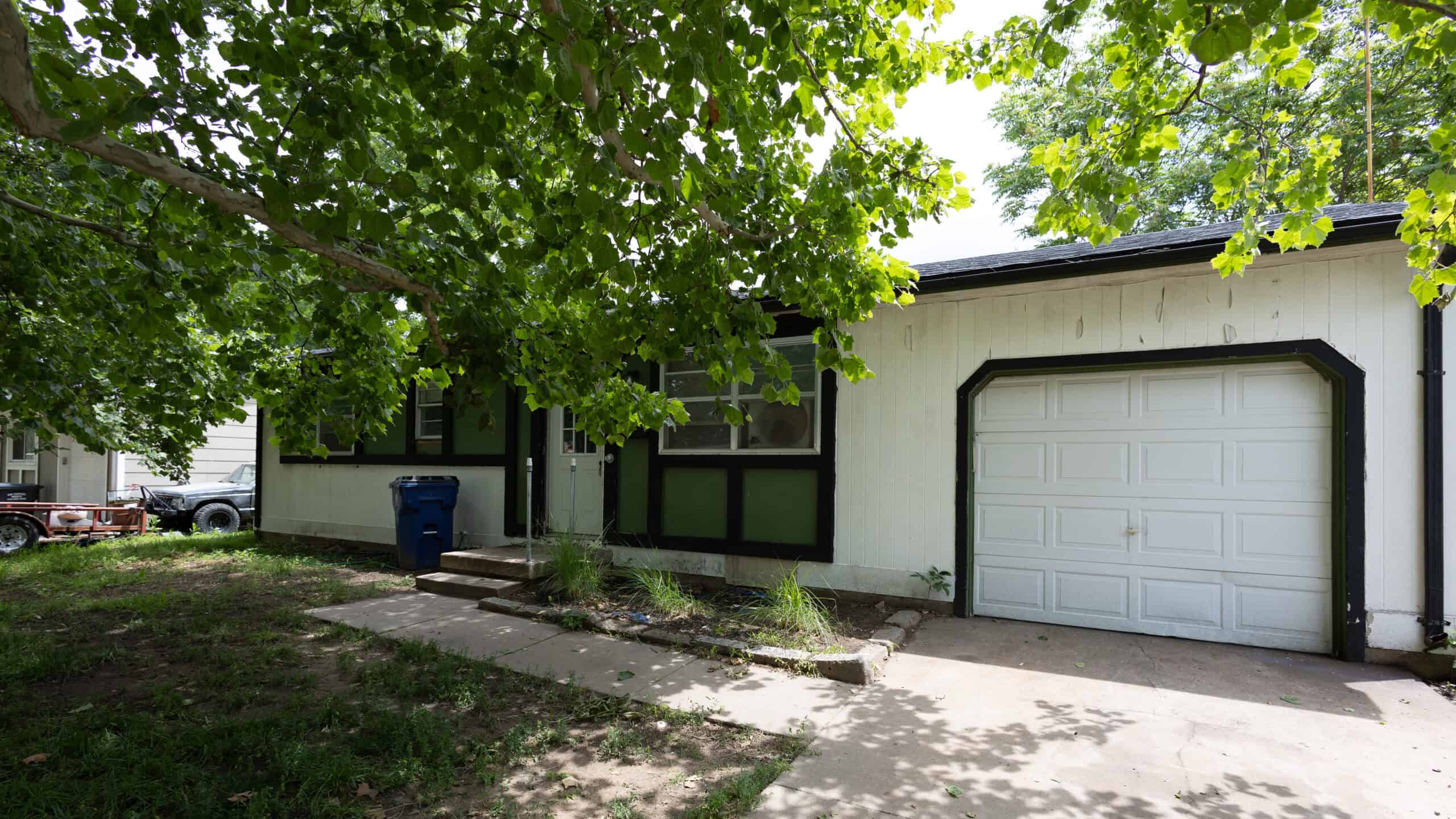

There is a crack running up the drywall above the doorway, the back door sticks in August and swings free in March, and the quote you just got to fix the foundation has five figures in it.
If you own a house in Wichita, this is not a rare problem. It is close to a regional feature.
Here is why it happens here, what it actually costs, and what your options look like if you want out instead of in.
Why Wichita Houses Move
Much of south central Kansas sits on expansive clay soil. Clay takes on water and swells, then dries out and shrinks, and it does this on a seasonal cycle.
Our weather makes that worse than it needs to be. A wet spring followed by a hot dry summer is exactly the cycle that moves soil the most, and the foundation sitting on it moves with it.
That is why so many houses here show stair-step cracks in the brick, doors that fit in one season and not another, and gaps opening where the garage meets the house. In a lot of cases the movement is seasonal and has been going on quietly for decades.
Cosmetic Movement and Structural Failure Are Different Things
Not every crack is a crisis, and treating them all the same costs people money in both directions.
Hairline cracks in drywall at the corners of doors and windows are common and often seasonal. Small vertical cracks in a basement wall are frequently shrinkage from the original pour.
The ones that deserve attention are horizontal cracks in a basement wall, which can indicate lateral pressure from the soil, walls that bow inward, stair-step cracking in exterior brick that keeps widening, and floors with a measurable slope. Those are worth a structural engineer rather than a free inspection from a company that sells piers.
That distinction matters for selling, because a buyer’s inspector will not make it for you. They will write “evidence of foundation movement, recommend further evaluation,” and the negotiation starts from there.
What Repairs Actually Cost Here
Costs vary with the method and the extent, so treat any single number with suspicion.
Minor crack sealing and drainage correction can be modest. Pier installation, whether steel push piers or helical piers, is priced per pier, and a wall that needs a row of them adds up quickly. Wall anchors or carbon fiber straps for a bowing basement wall sit somewhere in between.
The thing owners underestimate is what comes after. Lifting a foundation back toward level often opens new cracks in drywall, trim, and tile, and the repair quote rarely includes putting the inside of the house back together.
There is also drainage. If gutters are dumping water at the foundation and the grade slopes toward the house, piers treat the symptom and the cause keeps working.
You Have to Disclose It Either Way
Kansas sellers are expected to disclose known material defects, and foundation movement is squarely in that category.
That applies whether or not you repair it. In fact a completed repair comes with its own disclosure conversation, because buyers will ask what prompted it, who did it, and whether the warranty transfers.
Our guide to disclosure requirements for selling your house in Kansas covers the general obligation. The short version is that hiding it is both wrong and a bad strategy, since the inspector will find it.
Repair Then List, or Sell As-Is
If you repair first, you spend the money up front, you wait for the work and the interior patching, and you still disclose. What you gain is access to buyers using conventional financing, which is most of them.
If you sell as-is, you skip the outlay and the timeline, and your buyer pool narrows considerably. Many lenders will not finance a house with visible structural issues, so the realistic buyers are cash buyers and investors.
The way to decide is to get a real repair number and a realistic post-repair value, then subtract the repair, the carrying costs during the work, and the disclosure discount. Sometimes repairing wins clearly. Often the gap is much smaller than people expect, especially once the interior patching is counted.
Build that comparison on paper, with real quotes rather than estimates, before you commit to either path.
What a Buyer’s Lender Does With a Foundation Report
Even a buyer who is comfortable with the house may not be able to buy it, and that catches sellers off guard late in the process.
When an appraiser notes structural concerns, lenders commonly require a structural engineer’s evaluation before they will fund. Government-backed loans are stricter still, and FHA and VA appraisers are instructed to flag conditions affecting safety and soundness, which routinely means repairs have to be completed before closing rather than after.
That turns into a sequencing problem. The buyer will not pay for repairs on a house they do not own yet, and you may not want to fund repairs for a buyer who could still walk away.
It is why foundation deals so often die at the appraisal rather than the inspection, and why sellers who know there is movement are usually better off deciding the fix-or-sell question up front instead of discovering it from a lender six weeks in.
What to Get Before You Decide
Start with a structural engineer rather than a repair contractor. An engineer sells you an opinion, a contractor sells you piers, and you want the opinion first.
Ask for a report that says what is happening, whether it is active or stable, and what the recommended fix is. That report is useful whichever direction you go, because it answers the question every buyer and every cash buyer will ask.
Also check your drainage while you are at it. Extending downspouts and correcting the grade is cheap compared with everything else in this article.
We Buy Houses With Foundation Issues
We buy houses across Wichita with cracked walls, settled corners, and piers already in the ground. We look at the house as it is rather than asking you to fix it first.
You do not need to get three repair bids or patch anything to sell to us. If you already have an engineer’s report, bring it, and if you do not, that is fine too.
Our page on selling a house as-is in Wichita covers how it works, or you can request a cash offer and compare it against the repair quote.
This article is general information and not engineering or legal advice. Have a licensed Kansas professional evaluate your specific property.